Exactly How Irreversible LED Lights Installment Adds Beauty, Safety And Security, and Benefit
A well-lit home changes character after sunset. Rooflines develop, rock and siding grab appearance, walkways come to be easier to adhere to, and the entire residential or commercial property really feels extra finished. Great outside lights has constantly done that, however, for years property owners had to choose in between 2 imperfect options: temporary seasonal lights that looked cheery for a few weeks, or conventional landscape lights that handled only component of the task. Irreversible LED Illumination Installment has transformed that equation.
Done correctly, it provides a home a flexible lights system that looks refined on normal evenings, celebratory throughout vacations, and sensible when safety matters most. It is just one of those upgrades that seems decorative at first, then promptly proves itself in day-to-day use. Homeowners normally start by wanting a cleaner option to climbing up ladders each year. They wind up appreciating the visual charm, the minimized maintenance, and the straightforward convenience of drawing into a well-lit driveway on a dark evening.
The charm is not just ease. It is the mix of beauty, safety and security, and control, all built into the framework of the home rather than hanging from it as an afterthought.
Why long-term lights feels different from short-term lights
Most people know what temporary vacation illumination looks like when it is installed in a hurry. Cords sag a little. Clips change. A few areas quit working at the worst time. Shades seldom look the same from one light bulb to the next, especially after a season or 2 of storage in a hot garage. The arrangement may still bring joy, yet it often looks precisely like what it is: a momentary system.
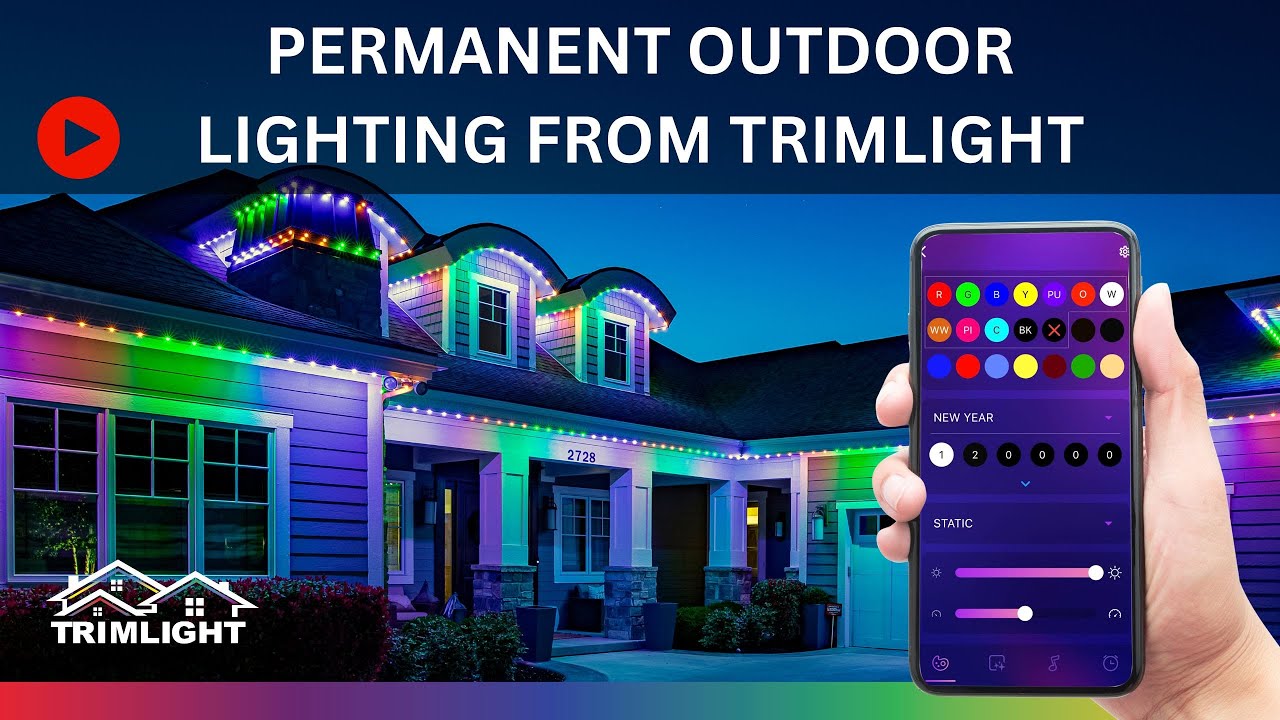
Permanent Holiday Lighting job in a different way due to the fact that they are made as part of the home's outside instead of something curtained over it. The most effective systems tuck neatly under soffits or along architectural lines to ensure that the fixtures remain almost unseen throughout the day. At night, the light shows up ahead from your house itself. That develops a much more refined effect, one that really feels intentional as opposed to seasonal.
This issues more than several homeowners anticipate. Outside upgrades are frequently evaluated by whether they boost the look of a residential property even when they are not proactively in operation. A long-term system can do that because the hardware is discreet. You are not looking at dangling cords in January or battling bins back into storage in February. The illumination is simply there, all set when needed.
That readiness alters the partnership individuals have with outdoor illumination. As opposed to asking, "Is it worth the difficulty to place brighten this year?" they begin asking, "What do we desire the house to look like this weekend?" That is a really various kind of ownership experience.
The visual upgrade goes beyond holidays
A great deal of home owners first find out about permanent systems through holiday display screens, and that makes good sense. Seasonal lights is psychological. It notes family members customs, gatherings, and unique seasons. Once people see what these systems can do on routine evenings, the year-round worth becomes clear.
One of one of the most popular setups is not dramatic whatsoever. It is a controlled, classy pattern using Timeless Cozy Soft Lights along the roofline and heights. That look flatters nearly every building design, from brick colonials to contemporary farmhouses to stucco homes in warmer environments. Cozy tones are easier on the eyes than severe blue-white light, and they have a tendency to enhance landscape design, natural timber, and stonework much better.
Subtle lighting can make a residence appear much more expensive without making it louder. It chooses eaves, dormers, and entrances in a way that aids the framework checked out clearly at night. If the system is zoned well, home owners can light just the front elevation on a normal night, then broaden to side gables, patio lines, or backyard enjoyable locations when visitors are over.
There is also a practical style advantage below. Standard floodlights often tend to clean a wall surface in broad light, which can squash detail and produce glare. Distributed LED points create interpretation. Instead of frustrating the eye, they direct it. The house looks composed.
That result is particularly beneficial for properties that disappear at night. Some homes look remarkable in daylight however come to be aesthetically anonymous after dark due to the fact that they have only a deck light and a garage fixture. A long-term system offers the home visibility after sundown without pushing it right into an industrial or overly theatrical look.
Safety is usually the function people appreciate most
Homeowners usually purchase permanent lights due to the fact that they are tired of installing temporary lights, yet they typically end up talking most about safety as soon as the system is in place.
The most obvious safety advantage is the one people think about first: no more repetitive ladder job. Going up to second-story rooflines with clips, cords, and staples is awkward even for confident DIYers. It ends up being riskier in cold weather, on high pitches, or when leaves and frost make surfaces glossy. Every installer has actually seen instances of makeshift setups that looked extra hazardous than festive. A professionally set up system lowers that yearly danger to almost zero.
Then there is the nighttime security of the building itself. A dark front walk, side backyard, or driveway side welcomes missteps. Good architectural illumination improves presence without the violence of an activity flooding. Visitors can see where they are going. Shipment chauffeurs can recognize the appropriate house more conveniently. Member of the family arriving home late feeling much less like they are walking right into a blacked-out lot.
Lighting likewise adds to perceived protection. It is not an alternative to locks, video cameras, or sound judgment, however homes that are softly and continually lit up tend to really feel less separated. Dark corners come to be much less welcoming. Entry points are much easier to check. A house that is noticeably occupied and well looked after sends out a signal, and that signal matters.
There is a stabilizing act here, though. Extra brightness does not automatically imply more security. Overlit homes can create glare, deep darkness contrasts, and aggravated next-door neighbors. The far better technique is split, controlled light put where it aids people see sides, methods, and entryways. This is another reason professional layout issues. A thoughtful installer will go for feature and restraint, not raw output.
Convenience is where the value substances over time
The genuine strength of Permanent LED Illumination Setup shows up month after month. It is not just that you avoid hauling boxes out of storage. It is that the system comes to be easy to make use of in little, average manner ins which make a home much more pleasurable to live in.
One household might use cozy white lighting every night with winter since sunset comes early and your home feels much more welcoming by doing this. Another might change to school colors on video game evenings, softer brownish-yellow tones for autumn, red and eco-friendly in December, and patriotic themes on national holidays. A pair who delights outdoors may utilize the system to specify a patio area border throughout supper celebrations, after that dim it later at night. Someone with aging parents might keep pathways and entry factors lit up on a schedule so no one needs to fumble in the dark.
That array issues because a set system must not really feel fixed in operation. The innovation is important just if it adjusts to real life. Application control, scene presets, timers, and zoning make that possible. The best configurations are easy sufficient that anybody in the house can utilize them without checking out a hand-operated every single time. If changing a lights scene seems like setting an aircraft cabin, the novelty disappears quickly.
There is likewise a seasonal benefit that many individuals forget. Weather condition windows come to be unimportant. You do not need to find a moderate Saturday to install lights before a holiday, or rush to remove them after a storm. The lights are already there, lined up, tested, and integrated. That alone can be worth the financial investment for homeowners with tall rooflines or requiring schedules.
What a quality installation in fact involves
A solid result depends as much on planning as on the lights themselves. Home owners occasionally think all permanent systems are generally the very same, but there is a meaningful difference between a carefully set up architectural item and a hurried arrangement that takes place to stay outside year-round.
The installer should begin by examining the roofline, trim profile, power accessibility, and presence from the street. Positioning affects whatever. Mount the components also reduced and they come to be apparent during the day. Area them improperly and you fume areas or uncomfortable voids. Disregard the home's geometry and the illumination can make an attractive residence look oddly segmented at night.
Cable routing matters as well. Tidy wire monitoring is one of the silent signs of professional work. Great installers hide lines, shield links from dampness, and prevent creating future service headaches. They also account for expansion, weather exposure, and the certain material they are connecting to, whether that is light weight aluminum fascia, vinyl soffit, block trim, or repainted wood.
Control systems are worthy of equivalent attention. Home owners must understand where the power supply will live, how the controller attaches, what happens if Wi-Fi is undependable, and how hands-on overrides function. These functional information seldom show up in extravagant before-and-after images, but they have a major impact on daily satisfaction.
A valuable conversation with an installer generally covers at the very least these factors:
- How visible will the fixtures be throughout daylight from the road and from the yard?
- What shade temperature functions best for day-to-day usage, especially if the objective is Traditional Warm Soft Lights instead of intense vacation tones?
- How are power, circuitry, and weatherproof connections being handled?
- Can the system be zoned so different rooflines or areas run independently?
- What does solution resemble if a section requires repairing later?
When homeowners ask these questions early, they tend to get better end results. They likewise stay clear of the usual blunder of purchasing by bulb count alone. More nodes do not constantly create a better look. Style self-control matters more.
Color, heat, and restriction make the difference
One of the most convenient means to inform whether a lighting design will age well is to check out just how it handles white light. Almost any kind of system can produce intense shades for a party. The harder task is making a residence appearance lovely on a normal Tuesday in February.
That is where warm-toned everyday scenes gain their keep. Soft amber-white or warm white settings often tend to flatter most outsides and prevent the sterile feel that chillier illumination can produce. If the goal is sophistication as opposed to spectacle, your house must really feel gently detailed, not electrified.
Many homeowners who at first request for vibrant screens at some point resolve right into a regular where shade is for special occasions and cozy white does the hefty lifting the remainder of the year. That pattern makes sense. Strong scenes are fun, however refined light is a lot more livable. It respects the area, photos better, and continues to be appealing over the long run.

Restraint likewise assists residential or commercial property worths in a more comprehensive feeling. Outside enhancements function best when they enhance style instead of compete with it. A long-term system should offer you alternatives, not pressure you into using every one of them at once.
Cost, long life, and what "worth it" really means
The expense of Permanent LED Illumination Installment differs commonly based upon roofline complexity, system high quality, controller attributes, and regional labor prices. A one-story home with a simple front altitude is a various project from a multi-gable two-story residence twisting around a courtyard and yard entertaining area. Because of that, sweeping cost insurance claims are not very useful.
A better method to think of worth is to compare what the system changes and what it includes. It replaces recurring seasonal setup initiative, repeated purchases of temporary strings and clips, storage hassle, and some risk. It adds year-round visual appeal, programmable scenes, much better exposure, and broader use past holidays.
For some households, the return is psychological as long as financial. They stop dreading configuration. They get more usage out of their outside spaces. Their home really feels ended up every evening. That is hard to take into a spread sheet, but it is real.
That claimed, not every home requires a full-system installation. Some homes may benefit more from a less complex combination of landscape lights, entrance illumination, and a limited permanent roofline accent. Excellent advice is rarely optimum. It fits your home, the budget plan, and just how the family members really lives.
Where permanent lights radiate brightest in everyday life
The strongest systems make their place not during major vacations, yet in smaller sized minutes. A household gets home after an evening game and the house is gently lit. Guests get here for a birthday celebration supper and promptly locate the front course. Grandparents see throughout winter season and there is enough light to navigate steps with confidence. A home owner away on travel can activate a classy night scene so your home never ever appears vacant.
Those moments are average, which is precisely the point. Home upgrades that enhance common life often tend to last. They become part of the rhythm of the home as opposed to an uniqueness attribute used two times a year.
I have actually also seen permanent lights solve visual issues that had nothing to do with vacations. A house with a deep obstacle from the road can look distant and underwhelming after dark. A properly created roofline system provides it meaning. A contemporary home with sharp geometry can appear level at night unless light traces the types. Even older homes with small design can gain a feeling of treatment and presence from understated illumination.
Common errors home owners can avoid
The largest blunders are typically not technical failures. They are judgment mistakes. People buy way too much illumination, a lot of shades, or insufficient design support. They assume any kind of service provider who can physically connect the system comprehends architectural illumination. That is not always true.
A couple of patterns show up frequently:
- Choosing illumination based upon display room impacts instead of genuine household scale.
- Ignoring exactly how the system searches in daylight when lights are off.
- Skipping zoning, then being sorry for the all-or-nothing operation later.
- Treating every elevation the same instead of responding to architecture.
- Underestimating the relevance of app use and solution access.
These are avoidable issues. They come down to reducing the decision process enough to think about day-to-day use, not just launch-day excitement.
Matching the lights to the home, not the trend
Styles transform promptly in outside design. What feels significant now can feel dated in a few years. That is one reason irreversible systems must be made around the style first and trends second.
A traditional brick home normally take advantage of softer, cleaner detailing and conventional scene choices. A modern home might sustain crisper geometry and periodic strong shade more conveniently. A woody residential property might require reduced strength because darkness in the environments makes the lights check out brighter. A thick neighborhood might ask for a lot more restraint out of courtesy to close-by homes.
This is why long-term lighting functions best when it is considered building enhancement instead of uniqueness lights. The modern technology is just the delivery system. The real objective is to make the home much more usable and extra appealing after dark.
When home owners approach it by doing this, they often tend to select far better products, ask better inquiries, and wind up with installations they still value years later.
A sensible upgrade that people utilize greater than they expect
Some home enhancements make a sprinkle on the first day and then discolor into the background. Permanent Holiday Lighting frequently do the opposite. They appear like a niche high-end initially, after that come to be something home owners make use of regularly due to the fact that the system is very easy, functional, and aesthetically rewarding.
The charm originates from a residence that holds its form and visibility after sundown. The security comes from better presence and less ladder job. The convenience originates from having illumination ready at the press of a button rather than buried in storage space tubs. Add the alternative for elegant Classic Warm Soft Lights on regular evenings and vivid scenes when the celebration asks for them, and the upgrade begins to make good sense well past the vacation season.
That is the actual pledge of Permanent LED Lights Installation. It is not practically celebrating more conveniently. It has to do with giving a home a trustworthy, refined nighttime identity, one that https://ameblo.jp/listedluminaires543/entry-12971120598.html works in silent everyday minutes equally as well as it does on unique nights.